"Come on! Ke Gan the Cybersecurity Gai" — Yunnan's "Cybersecurity Market" Comes Alive in Kunming
来源:InKunming时间:2026-10-08 14:49:43

On the afternoon of September 18, one of the events of the 2026 China Cybersecurity Week, Yunnan series — "Come on! Ke Gan the Cybersecurity Gai" — "Cybersecurity Market" opened to great fanfare at the Donghua Xinying Farmers' Market in Kunming. The campaign brings cybersecurity outreach straight into the lively atmosphere of a bustling wet market, letting residents absorb cybersecurity tips while they stroll, play, shop, and snack.

"Come on! Ke Gan the Cybersecurity Gai" — Yunnan's "Cybersecurity Market" Opens at Donghua Xinying Farmers' Market in Kunming
In the Yunnan dialect, "Ke" means "go," and "Gan Gai" means "hit the market." So this event is at once a trip to a lively fair and a gathering to learn about cybersecurity.
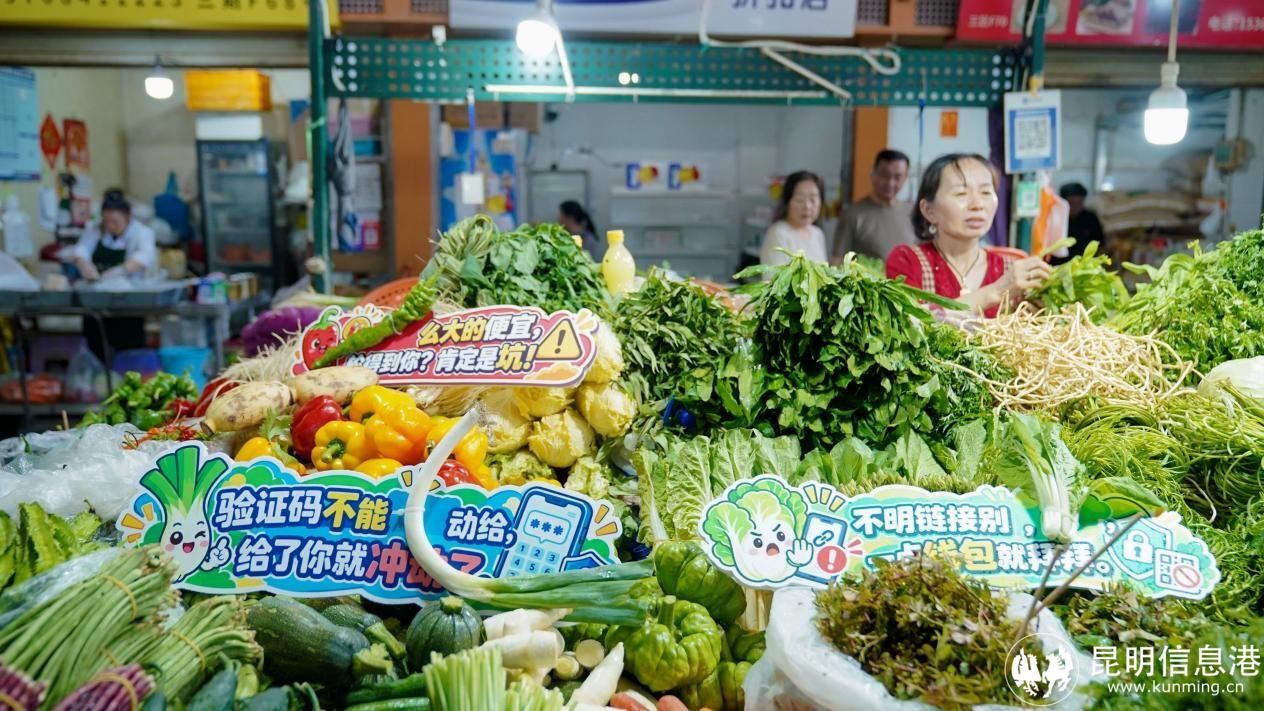
"Cybersecurity Veggie Stall": slogans hidden among the produce
Tucked between the fruit and vegetable stalls are playful puns on local produce. A sign by the Napa cabbage reads: "Don't 'step' on unknown links, one tap and your wallet's gone." Beside the scallions: "Never rush to hand out your verification code." Garlic, ginger, carrots, walnuts, chilies, watermelons, and lemons all become part of the cybersecurity messaging. Residents who snap photos and read the slogans aloud can redeem small gifts. Staff members chat face-to-face with vendors, tying advice to everyday scenarios like mobile payment QR codes, reminding everyone to keep their payment QR codes secure and avoid tapping unfamiliar links.. On the outer plaza, a long queue forms at the "Peach-and-Pear Danger" wisdom stall, a playful pun on the Chinese phrase for "escape danger." Signs are tucked into peaches, plums, passion fruit, and pomegranates. Residents who ring a fruit with a ring toss, read the slogan aloud, and name one cybersecurity prevention method get to take the fruit home.
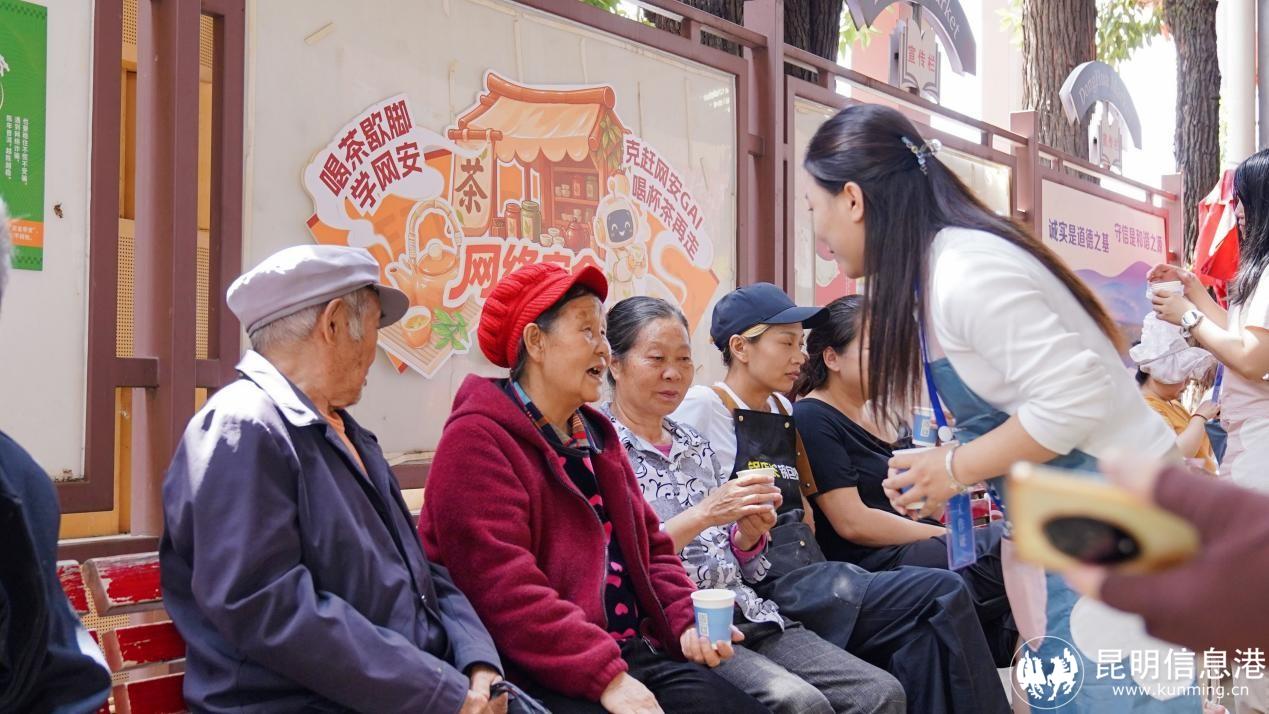
A staff member serves tea and shares cybersecurity tips with residents at the "Cybersecurity Tea House."
The market's leisure corridor has been transformed into a "Cybersecurity Tea House," offering four themed teas, each tied to a cybersecurity lesson. As staff pour tea, they explain: "Filter Tea" reminds people to filter out spam and scam calls; "Calming Tea" teaches residents not to panic when encountering fraud, but to stay vigilant; "Cooling Tea" prompts timely removal of computer viruses; and "Warming Tea" reminds everyone to set complex passwords. Over a cup of tea, cybersecurity knowledge quietly sinks in.
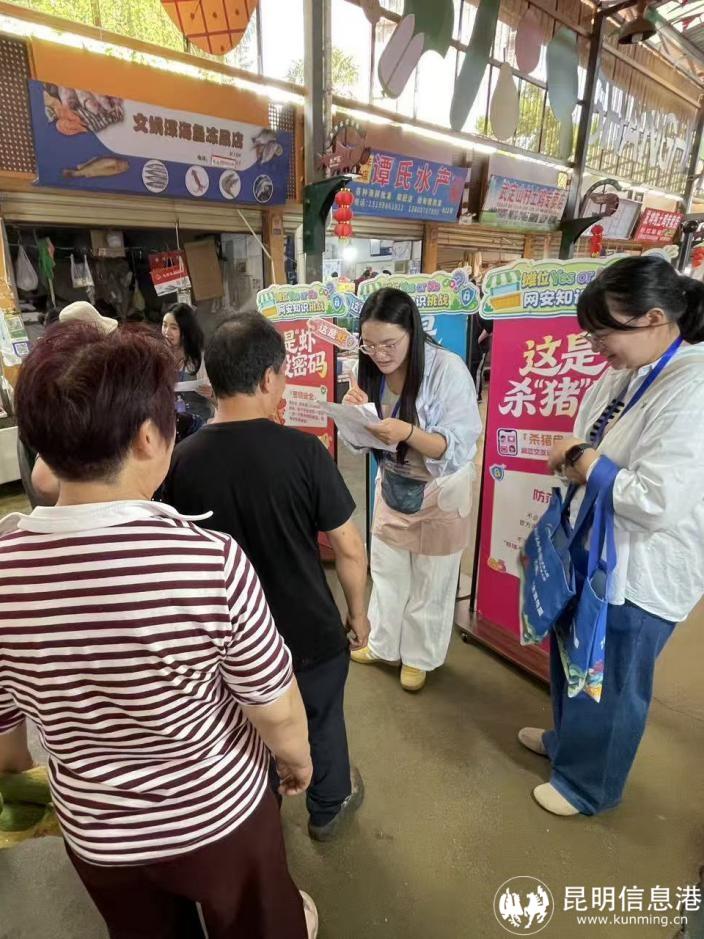
Residents join the "Stall Yes or No" cybersecurity knowledge challenge.
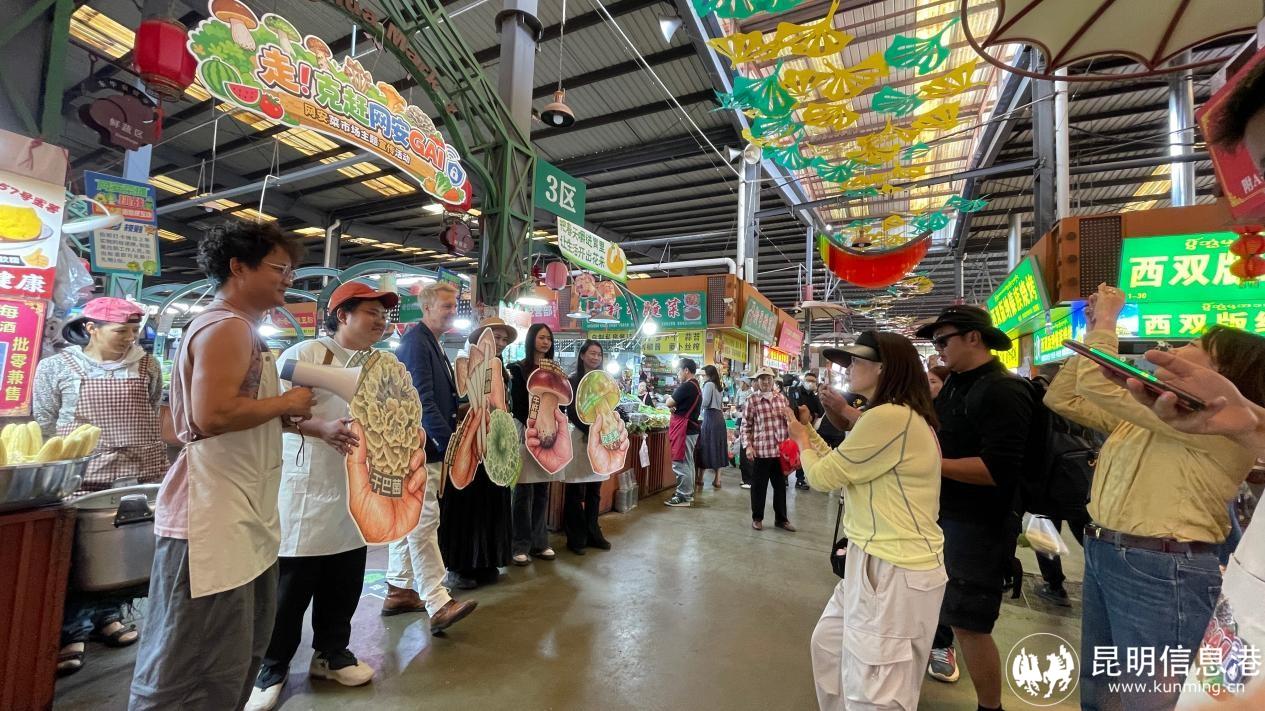
Residents check in at the wild mushroom "Cybersecurity Poison-Identification" fair.
Hidden beside real market stalls is the "Stall Yes or No" challenge: next to the pork stall is a display explaining how to avoid "pig-butchering" scams; in the seafood section, residents are randomly quizzed on topics like phishing and the risks of setting passwords carelessly. The most distinctly Yunnan-style attraction is the wild mushroom "Cybersecurity Poison-Identification" fair. Using wild mushrooms as an analogy for cyber viruses, residents learn to recognize common threats: ransomware, Trojans, worms, phishing links, and backdoors. They hold up signs for photos and flip cards to learn, identifying cyber threats just as locals tell edible mushrooms apart from toxic ones. At the "Cybersecurity Snack Grill," the aroma fills the air as vendors roast rushan, a Yunnan dairy specialty, on the spot. Residents who answer cybersecurity questions receive a freshly grilled portion. Through the lesson that "rushan stretches longer the more you pull it, just as rumors distort more the further they spread," residents understand why they should neither fabricate nor spread rumors.
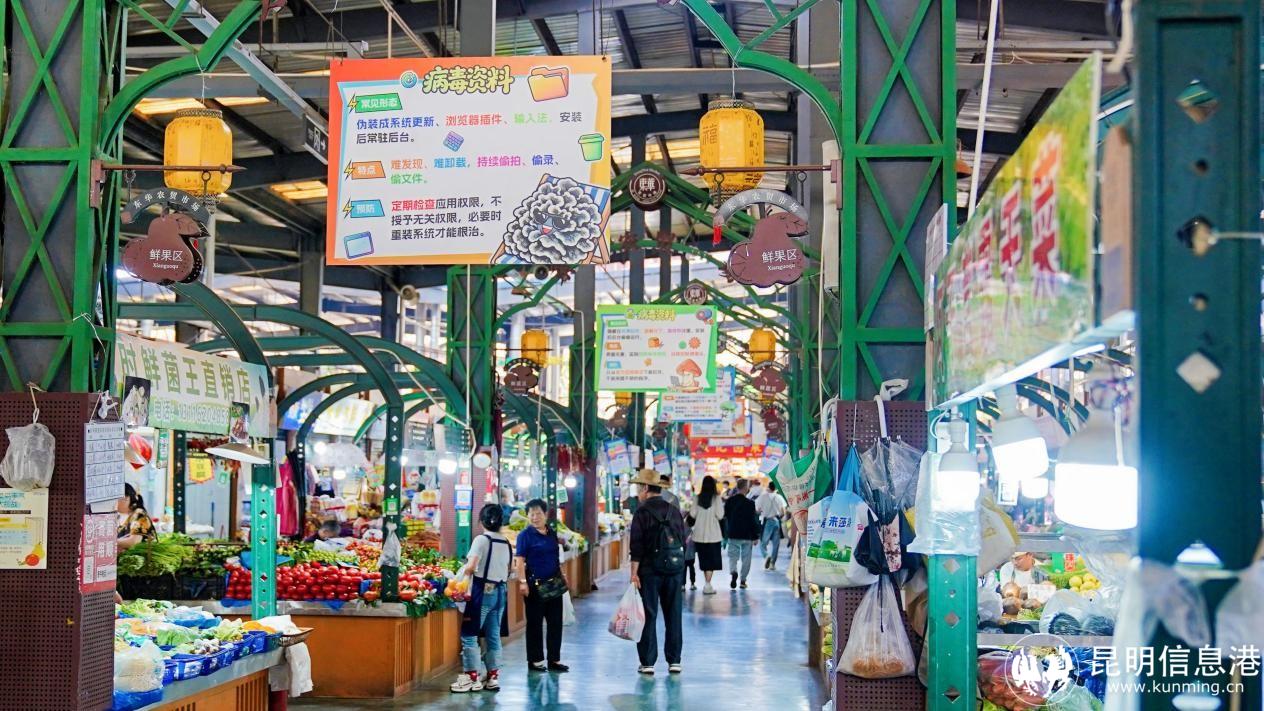
"Come on! Ke Gan the Cybersecurity Gai" — Yunnan's "Cybersecurity Market" event.
The event uses everyday Yunnan life scenes as its vehicle, transforming cybersecurity knowledge from "words on a display board" into "vegetables people can hold, tea they can taste, and messages they can remember." Abstract cybersecurity concepts become tangible, accessible, and easy to share. Cybersecurity outreach moves out of conference halls and into daily life, integrating cybersecurity education into familiar daily activities. This allows cybersecurity awareness to take root naturally—making cybersecurity campaigns warmer and more down-to-earth.

9月18日下午,2026年国家网络安全宣传周云南省系列活动之一的“走!克赶网安GAI——‘网安菜市场’”在昆明东华新迎农贸市场热闹开市。活动将网络安全宣传“搬”进充满烟火气的农贸市场,让群众在逛、玩、买、吃的轻松氛围中学习网络安全知识。
“克”是云南方言“去”的意思,“赶GAI”即“赶集”。本次活动既是去赶一场热闹的集市,也是去赶一场网络安全知识聚会。
在蔬菜水果摊位间,白菜上挂着“不明链接别‘白踩’,一点钱包就拜拜”,大葱旁贴着“验证码不能‘葱’动给”,大蒜、生姜、胡萝卜、核桃、辣椒、西瓜、柠檬等果蔬都成了网安知识的“代言人”,市民拍照打卡、念出标语即可兑换小礼品。工作人员与摊主面对面聊网安、讲防范,结合手机收付款码等日常经营场景,提醒大家看紧收款码、不点陌生链接。外广场上,“桃”“梨”危险网安智慧摊前排起长队,桃子、李子、百香果、石榴等水果上插着宣传立牌,套中水果、念出标语并说出一条网络风险防范方法就能把水果带走。
市场休闲长廊变身“网络安全茶水铺”,为市民提供4款主题茶饮,每款茶对应一个网络安全知识点,工作人员一边倒茶一边讲解,“过滤茶”提醒大家过滤垃圾信息和诈骗电话,“定心茶”教大家遇到诈骗不慌不乱多留心,“清热茶”提示及时清除电脑病毒,“暖胃茶”提醒大家设置复杂密码。喝茶歇脚间,网络安全知识悄然入心。
“摊位Yes or No”网安知识挑战藏在真实的摊位旁,猪肉摊旁边是“杀猪盘”的防范知识;水产区里,随机邀请市民围绕网络“钓鱼”、“虾”设密码等题目快问快答。最具云南特色的野生菌“网安鉴毒”大会上,以野生菌类比网络病毒,教大家认识防范勒索病毒、木马病毒、蠕虫病毒、钓鱼链接、后门程序等常见网络安全风险,市民举牌拍照、翻面学知识,像云南人辨菌子一样辨别网络病毒。烤乳扇“网安小烤坊”前香气四溢,店家现场烤制乳扇,市民参与网安问答就能领到一份现烤乳扇,在“乳扇越拉越长、谣言越传越偏”的讲解中听懂了不造谣、不传谣的道理。
本次活动以云南人熟悉的生活场景为载体,把网安知识从“展板上的字”变成“手里的菜、口中的茶、记住的话”,让抽象的网络安全知识转化为可感可及、易于传播的趣味内容。网络安全宣传搬出了会场、走进了群众日常生活,实现了网络安全宣传与百姓生活场景的深度融合,让安全理念在润物无声中扎根人心,也让网络安全宣传活动更有温度、更接地气。

