Institutional Innovation Drives New Momentum for Border Opening-Up as Lao, Sri Lankan Media Focus on Kunming Area
来源:InKunming时间:2026-09-16 11:02:00

On September 9, media outlets including Laos' Pasaxon (People's Newspaper) and Sri Lanka's Lankapuvath (Sri Lanka National News Agency) turned their focus to the opening-up practices of the China (Yunnan) Pilot Free Trade Zone Kunming Area in the seven years since its inauguration. The reports note that, as a key frontier of China's opening-up to South and Southeast Asia, the Kunming Area has drawn on its geographic advantages as a border region and on cross-border transport corridors such as the China-Laos Railway to steadily advance institutional innovation. These efforts have driven coordinated improvements in the business environment, industrial development and international cooperation, showcasing distinctive border-area features as the Area expands high-standard opening-up.
The reports focused on the Area's explorations in tackling the challenges of border-area opening-up through institutional innovation. Over the past seven years, the Area has registered a total of 228 institutional innovation outcomes, 16 of them national firsts, and has completed all 94 pilot reform tasks assigned by the State Council. Cross-regional government services, international commercial legal services and the development of cross-border logistics standards have continued to improve, facilitating cross-regional business operations and international trade. Meanwhile, cross-border logistics corridors such as the China-Laos Railway have further strengthened Kunming's economic and trade links with South and Southeast Asia, accelerating the integration of logistics, trade and industry. The reports show that, as the strengths of open corridors and institutional innovation continue to compound, the Kunming Area is further fulfilling its role as a hub linking China with South and Southeast Asia, opening up new space for regional economic and trade cooperation.
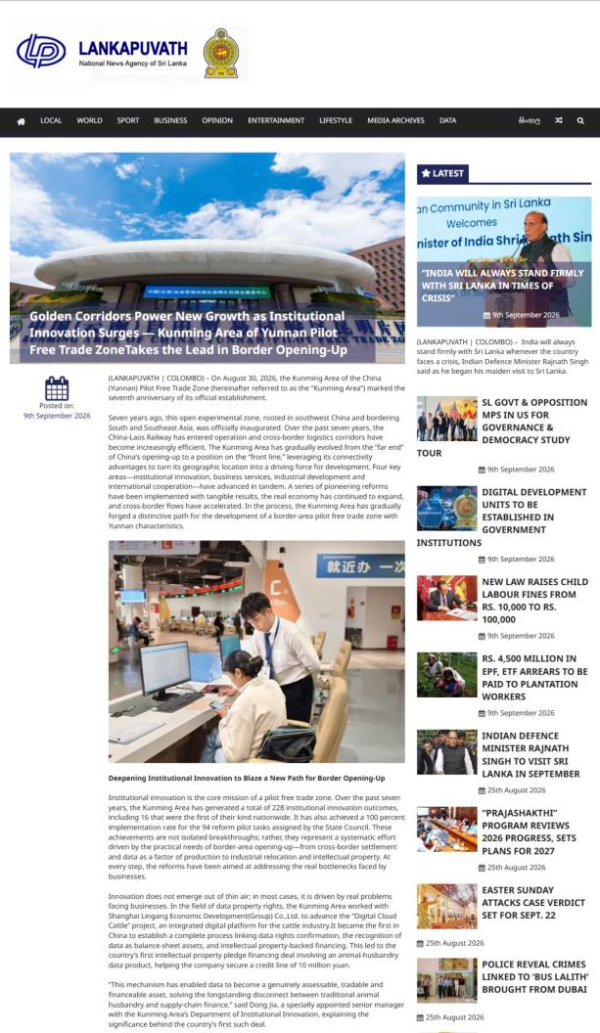
Sri Lanka's Lankapuvath (Sri Lanka National News Agency) website screenshot
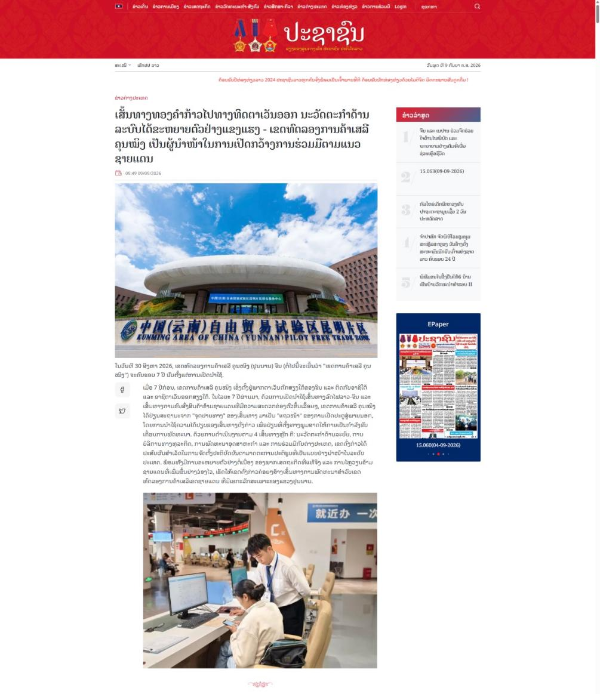
Laos' Pasaxon (People's Newspaper) website screenshot
The full text of the report is as follows:
Golden Corridors Power New Growth as Institutional Innovation Surges — Kunming Area of Yunnan Pilot Free Trade Zone Takes the Lead in Border Opening-Up
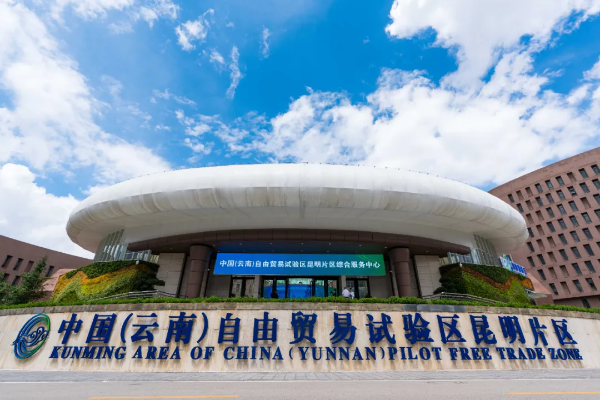
On August 30, 2026, the Kunming Area of the China (Yunnan) Pilot Free Trade Zone (hereinafter referred to as the “Kunming Area”) marked the seventh anniversary of its official establishment.
Seven years ago, this open experimental zone, rooted in southwest China and bordering South and Southeast Asia, was officially inaugurated. Over the past seven years, the China-Laos Railway has entered operation and cross-border logistics corridors have become increasingly efficient. The Kunming Area has gradually evolved from the “far end” of China’s opening-up to a position on the “front line,” leveraging its connectivity advantages to turn its geographic location into a driving force for development. Four key areas—institutional innovation, business services, industrial development and international cooperation—have advanced in tandem. A series of pioneering reforms have been implemented with tangible results, the real economy has continued to expand, and cross-border flows have accelerated. In the process, the Kunming Area has gradually forged a distinctive path for the development of a border-area pilot free trade zone with Yunnan characteristics.
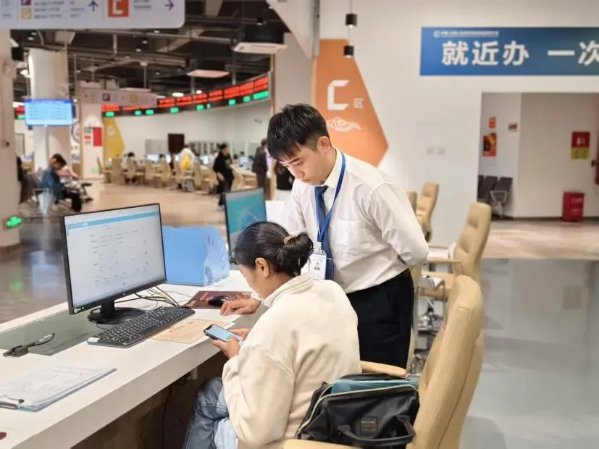
Deepening Institutional Innovation to Blaze a New Path for Border Opening-Up
Institutional innovation is the core mission of a pilot free trade zone. Over the past seven years, the Kunming Area has generated a total of 228 institutional innovation outcomes, including 16 that were the first of their kind nationwide. It has also achieved a 100 percent implementation rate for the 94 reform pilot tasks assigned by the State Council. These achievements are not isolated breakthroughs; rather, they represent a systematic effort driven by the practical needs of border-area opening-up—from cross-border settlement and data as a factor of production to industrial relocation and intellectual property. At every step, the reforms have been aimed at addressing the real bottlenecks faced by businesses.
Innovation does not emerge out of thin air; in most cases, it is driven by real problems facing businesses. In the field of data property rights, the Kunming Area worked with Shanghai Lingang Economic Development(Group) Co.,Ltd. to advance the “Digital Cloud Cattle” project, an integrated digital platform for the cattle industry. It became the first in China to establish a complete process linking data rights confirmation, the recognition of data as balance-sheet assets, and intellectual property-backed financing. This led to the country’s first intellectual property pledge financing deal involving an animal-husbandry data product, helping the company secure a credit line of 10 million yuan.
“This mechanism has enabled data to become a genuinely assessable, tradable and financeable asset, solving the longstanding disconnect between traditional animal husbandry and supply-chain finance,” said Dong Jia, a specially appointed senior manager with the Kunming Area’s Department of Institutional Innovation, explaining the significance behind the country’s first such deal.
In digital finance, the Kunming Area has worked with financial institutions to explore new approaches to cross-border settlement. Leveraging the mBridge multilateral central bank digital currency platform, the Yunnan Branch of Bank of China completed China’s first remittance transaction to Dubai under the initiative. It was also Yunnan Province’s first cross-border settlement transaction using the digital yuan involving the United Arab Emirates. The initial pilot transaction amounted to 4.9656 million yuan and enabled point-to-point payments between domestic and overseas banks, significantly reducing foreign-exchange risks and transaction costs. The “Kunming precedent” offers a model that foreign trade enterprises in Yunnan and beyond can draw on when conducting cross-border payments in multiple currencies and markets.
The vitality of institutional innovation lies in its replicability and scalability. China’s first pilot program for an integrated bank settlement account system covering both domestic and foreign currencies has improved the efficiency of cross-border settlements by 30 percent. The registration time for the protection and utilization of data-related intellectual property rights has been cut by 80 percent in China’s first such initiative, while the “new model for the graduated undertaking of industrial relocation” was selected by the Ministry of Commerce as a best-practice case. These breakthroughs, each representing a step from “zero to one,” have come together to form the replicable and scalable “Kunming experience.” The essence of that experience is not innovation for innovation’s sake, but targeted institutional reform that addresses real challenges in border areas, such as inefficient flows of production factors and high market barriers, using institutional flexibility to unlock new room for development.
Improving Business Services to Create a Supportive Environment for Enterprise Growth
Whether businesses are willing to come—and whether they choose to stay—is ultimately determined by the business environment. Since its establishment, the Kunming Area has made improving the business environment its “top priority,” continuously deepening reforms to streamline government functions, delegate powers, strengthen regulation and improve public services. Through a “four-zone coordinated development” mechanism, it has promoted policy coordination and resource sharing. The central aim is to minimize market-entry barriers arising from administrative boundaries and allow businesses to focus their energy on running their operations.
Cross-regional reform of business registration has been one of the area’s most groundbreaking initiatives. In 2024, the Mohan-Boten Economic Cooperation Zone branch of the Kunming Administration for Market Regulation and the Economic and Technological Development Zone branch of the Kunming Administration for Market Regulation signed a memorandum of cooperation. By 2026, the Kunming Area had become the first in Yunnan Province to achieve full coverage of the “one business license, multiple locations” filing system, completing a transition from a pilot program covering two zones to full implementation across all four zones.
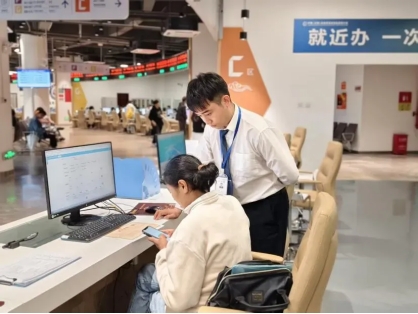
The accompanying “Kunmo Cross-Zone Access” administrative approval model covers 29 matters that can now be handled across administrative boundaries. Companies registered in Mohan but operating with teams based in Kunming no longer need to shuttle between the two locations to complete procedures. According to an official with the Kunming Area’s Comprehensive Service Center, dedicated service staff provide guidance throughout the entire process, replacing the need for businesses to “run around between different offices” with a model in which service personnel handle the process from start to finish.
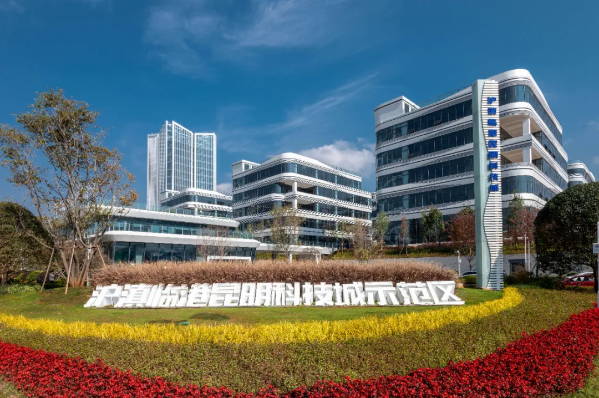
The upgrading of government services has given businesses another taste of the “Kunming touch.” The Kunming Area has made its “department heads on duty to hear and address complaints” program a regular practice, helping businesses resolve pressing difficulties involving financing, employment and land use. The government service center at the Shanghai-Yunnan Lingang Kunming Science and Technology City follows the principles of “proactive service” and “frontline service,” upgrading government services from merely being “available” to being easier, faster and smarter, thereby bridging the “last mile” in serving businesses.
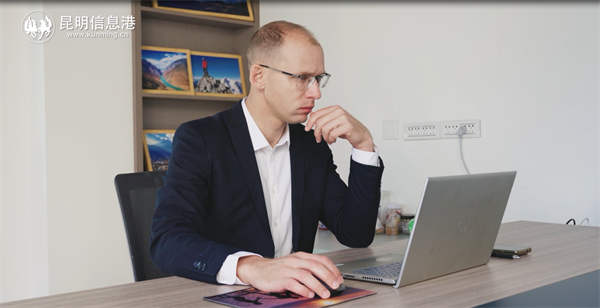
French entrepreneur Mr. Yannick Benichou has experienced firsthand the steady improvement in Kunming’s business environment.
For companies going global, financing and legal services are two hurdles they cannot avoid. The Kunming Area has introduced an innovative “worry-free credit insurance” program based on a “credit insurance + financing” model, which has supported more than US$300 million in export earnings to date. Its international legal services complex integrates resources for cross-border legal services and has been selected as one of China’s top 100 business-environment cases.
Foreign investors doing business in Kunming have also felt the tangible impact of gradual improvements in the financial environment. “A few years ago, joint ventures like ours could hardly get any loans,” said Mr. Yannick Benichou, a French entrepreneur who has lived in Kunming for 10 years. He said the situation changed significantly around 2020. “Banks began approaching us proactively and offering credit loans to support our business development.” He also successfully obtained a mortgage to purchase a home in Kunming. In his view, “These small changes are very important for retaining talent.”
Promoting Industrial Upgrading to Build a Powerful Engine for High-Quality Development
Industry is the foundation of an industrial zone and ultimately the point at which institutional innovation and the business environment translate into tangible results. Looking back on the 14th Five-Year Plan period, the Kunming Area successfully established two provincial demonstration bases for new industrialization, one focused on equipment manufacturing and the other on biomedicine. Its equipment manufacturing cluster has also been recognized as a provincial advanced equipment manufacturing cluster.
The area now hosts 380 high-tech enterprises, 12 national-level “Little Giant” enterprises specializing in niche markets, advanced technologies and strong innovation capabilities, and 188 provincial-level specialized and innovative small and medium-sized enterprises. A modern industrial system led by manufacturing and supported by coordinated development of the secondary and tertiary sectors is now taking shape.
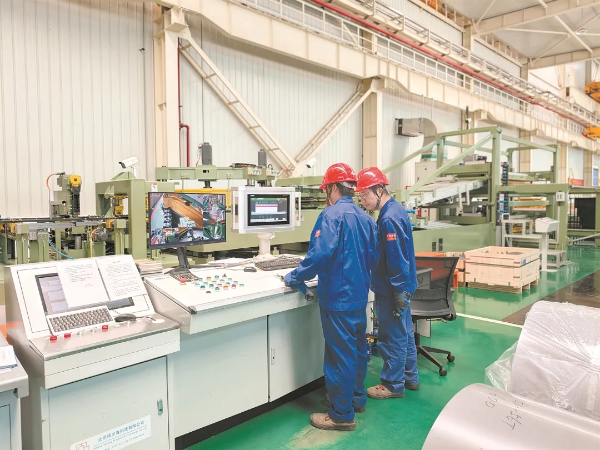
Workers monitor equipment operation in the intelligent production workshop of Yunbian Electric.
More compelling than the figures themselves are the stories of established companies putting out new growth. Yunnan Transformer Electric Co., Ltd., which has more than 90 years of history, has built China’s highest-altitude 500-kilovolt transformer shielding test hall, filling a gap in ultra-high-voltage manufacturing on the Yunnan-Guizhou Plateau. Its railway traction transformer products have maintained the country’s largest market share and have been supplied for major national projects including the China-Laos Railway, the Beijing-Xiongan Intercity Railway and the Chongqing-Kunming High-Speed Railway.
Yang Lin, director of the company’s marketing center, said the company is accelerating its digital and intelligent transformation. Meanwhile, Xuelan Dairy became the first dairy company in China to receive the Quality Dairy Certification, while Yunnan Xicao Resources won an international innovation award for beauty ingredients for plant cell fluid extracted from coffee fruit skins. Drawing on Yunnan’s distinctive resource advantages, local companies are pursuing differentiated development paths.

At the Xuelan Milk product display area, assorted dairy products are neatly laid out, demonstrating the diverse product portfolio of this home‑grown Yunnan dairy firm.
For industry to expand outward, logistics must keep pace. In 2026, construction began on the Kunming Logistics Distribution Center project, with a total investment of approximately 1.06 billion yuan, in the core Wangjiaying area of the China-Kunming International Land Port. The project will closely connect with cross-border logistics corridors including the China-Laos and China-Vietnam routes, helping address shortcomings in the area’s smart logistics infrastructure.
The project complements the growing capacity of the China-Laos Railway, as a virtuous cycle in which “corridors drive logistics, logistics drives trade, and trade drives industry” gradually takes shape in the Kunming Area.
Expanding International Cooperation to Build a Regional Hub for South and Southeast Asia
If institutional innovation and the business environment are the Kunming Area’s “internal strength,” then openness and international cooperation are its “external strength.” Over the past seven years, the Kunming Area has transformed its geographic advantages into advantages in opening-up, continuously expanding the breadth and depth of its external engagement and strengthening its role as a hub reaching into South and Southeast Asia.
Opening-up is not only about facilitating the flow of goods; it also involves aligning rules and standards. Leveraging its international legal services complex, the Kunming Area coordinates domestic and overseas resources in legal practice, intellectual property, taxation and finance, and customs procedures. It has built a full-chain service system covering cross-border customs declarations, international arbitration, overseas patent strategies and localized compliance, encouraging companies to move from “going it alone” to “going global together while ensuring compliance.”
In 2026, the Kunming Area signed a cooperation agreement with the Yunnan Institute of Standardization and the municipal administration for market regulation, and launched a platform to promote standards-based institutional opening-up. It also released China’s first association standard for cross-border railway logistics services, the *Specification for Cross-Border Logistics Services for China-Laos Railway Container International Freight Trains*, filling a gap in the standardization of cross-border logistics services in the region.
An official with the Yunnan Logistics and Supply Chain Association said that standards provide services with a common “yardstick,” making it possible to evaluate service quality using data and encouraging the industry to improve and upgrade. The shift from “experience-driven” to “standards-driven” development reflects a deeper evolution in the Kunming Area’s pursuit of institutional opening-up.
The opening-up of the area has also attracted growing international attention. The Academy of International Business Officials under the Ministry of Commerce organized a training program for officials from Latin American countries to visit the Kunming Area and hold discussions there. More than 30 officials and business leaders from countries including Spain, Colombia and Costa Rica spoke positively of the international standards of the area’s “one-stop” integrated services.
As the capacity of the China-Laos Railway continues to expand, more and more companies are taking advantage of the “Lancang-Mekong Express,” promoting deeper integration of logistics, trade and industry.
After seven years of determined effort, the Kunming Area has successfully forged a new path for border-area opening-up, guided by institutional innovation, supported by a sound business environment, grounded in industrial development and strengthened through international cooperation.
Its achievements are reflected not only in one “first-of-its-kind” transaction after another and in successive sets of upgraded performance indicators, but also in its deeper integration into national strategies. The Kunming Area has played a strategic supporting role in advancing the building of a China-Laos community with a shared future and in driving regional development across South and Southeast Asia.
As it embarks on a new journey at the seventh anniversary of its establishment, the Kunming Area will remain focused on institutional opening-up, deepen reform and innovation, accelerate efforts to apply for designation as a pilot zone for standards-based institutional opening-up, and continue to develop and share the replicable and scalable “Kunming experience.”
Along these golden corridors, the pace of border-area opening-up is becoming ever more steady; in this experimental zone, the tide of institutional innovation continues to surge. (Kunming Information Hub | Correspondents Wang Zhijie and Hu Shichen)

9月9日,老挝《人民报》、斯里兰卡《斯里兰卡通讯社》等媒体聚焦中国(云南)自由贸易试验区昆明片区挂牌成立七年来的开放实践。报道指出,作为中国面向南亚东南亚开放的重要前沿,昆明片区依托沿边区位优势和中老铁路等跨境通道,持续推进制度创新,推动营商环境、产业发展和国际合作协同提升,在扩大高水平对外开放中展现出鲜明的沿边特色。
报道重点关注昆明片区以制度创新破解沿边开放难题的探索。七年来,片区累计形成制度创新成果228项,其中16项为全国首创,国务院下达的94项改革试点任务全部落地;跨区域政务服务、国际商事法律服务、跨境物流标准建设等持续推进,为企业跨区域经营和国际贸易提供便利。与此同时,中老铁路等跨境物流通道不断强化昆明与南亚东南亚的经贸联系,推动物流、贸易与产业加快融合。报道显示,随着开放通道和制度创新优势持续叠加,昆明片区正进一步发挥连接中国与南亚东南亚的枢纽作用,为区域经贸合作拓展新的空间。
斯里兰卡《斯里兰卡通讯社》网站报道截图
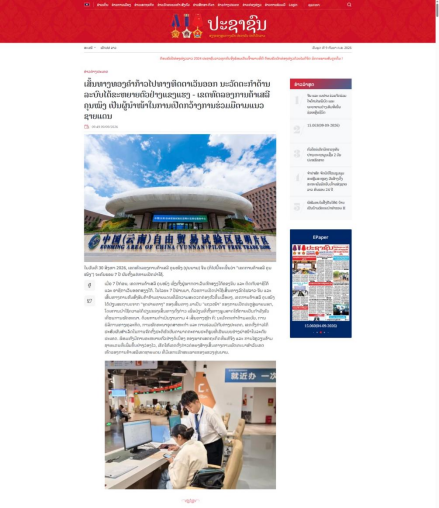
老挝《人民报》网站报道截图
以下为报道原文:
2026年8月30日,中国(云南)自由贸易试验区昆明片区(以下简称“昆明片区”)迎来挂牌七周年。
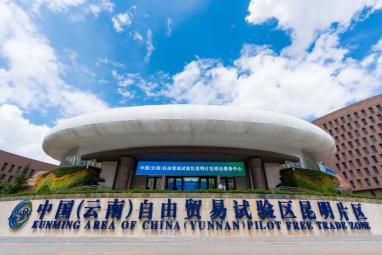
七年前,这片扎根西南、毗邻南亚东南亚的开放试验田正式揭牌起步。七年间,中老铁路开通运营、跨境物流通道日益畅通,昆明片区从开放的“末梢”逐步走向“前沿”,依托通道优势把区位条件转化为发展动能。制度创新、营商服务、产业培育、对外合作四条主线同步推进,一批全国首创改革落地见效,实体产业不断壮大,跨境流通持续提速,逐步走出一条具有云南特色的沿边自贸试验区发展路径。
深耕制度创新,闯出沿边开放新路子
制度创新是自贸试验区的核心使命。七年来,昆明片区累计形成制度创新成果228项,其中16项为全国首创,国务院赋予的94项改革试点任务实施率达100%。这些成果并非零散的突破,而是围绕沿边开放的实际需求系统推进——从跨境结算到数据要素,从产业承接到知识产权,改革的指向始终是破解企业面临的真实堵点。
创新不是凭空而来,大多奔着企业的真实难题去。在数据产权领域,昆明片区联合上海临港集团推动“数字云牛”集成创新,在全国率先走通“数据确权—资产入表—知产质押”全链路,推动全国首单牧业数据产品知识产权质押融资落地,帮助企业获得1000万元授信。“这一机制让数据真正成为可评估、可交易、可融资的资产,破解了传统牧业与供应链金融‘两张皮’的难题。”昆明片区制度创新部特聘高级主管董佳这样解读首单背后的深意。
在数字金融领域,昆明片区联合金融机构大胆探索跨境结算新路径。依托多边央行数字货币桥,中国银行云南分行率先实现全国首单中国对迪拜汇款业务落地,这也是云南省首笔对阿联酋数字人民币跨境结算业务,首笔试点金额496.56万元,实现境内外银行点对点支付,大幅降低汇兑风险和交易成本,为省内外贸企业开展多国别跨境支付提供了可借鉴的“昆明先例”。
制度的生命力在于可复制、可推广。全国首个本外币合一银行结算账户体系试点使跨境结算效率提升30%,数据知识产权保护运用全国首单登记时效缩短80%,“梯度承接产业转移新模式”入选商务部最佳实践案例。一个个“从0到1”的突破,汇成可复制、可推广的“昆明经验”,即不能为创新而创新,而是紧扣沿边地区要素流通不畅、市场壁垒较高等现实问题,用制度松绑换取发展空间。
优化营商服务,打造企业发展暖心沃土
企业愿不愿来、来了留不留得下,营商环境说了算。挂牌以来,昆明片区把优化营商环境作为“一号工程”,持续深化“放管服”改革,依托“四区联动”机制推动政策协同、资源共享,核心思路是把行政区划带来的准入壁垒降到最低,让企业把精力放在经营上。
跨区域商事登记改革是其中极具突破性的探索。从2024年昆明市市场监督管理局中国老挝磨憨—磨丁经济合作区分局与昆明市市场监督管理局经济技术开发区分局签署合作备忘录,到2026年在全省率先推行“一照多址”备案登记全覆盖,昆明片区完成了从“两区试点”到“四区全域”的跨越。配套推出的“昆磨跨区通”行政审批模式,覆盖29项“跨区通办”事项,注册地在磨憨、运营团队在昆明的企业,再也不用“两头跑”。昆明片区综合服务中心有关负责人介绍,帮办代办专员全程靠前指导,变“企业分头跑”为“专员全程办”。
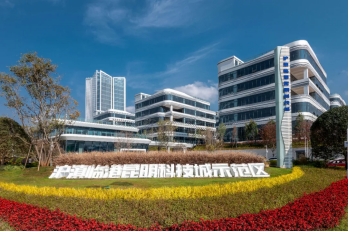
政务服务的提档升级,则让企业感受到另一种“昆明温度”。昆明片区常态化开展“局长坐诊接诉”活动,精准解决企业融资、用工、用地等急难愁盼问题;沪滇临港昆明科技城政务服务站坚持“主动服务、靠前服务”,推动政务服务从“能办”向“好办、快办、智办”升级,打通服务企业“最后一公里”。
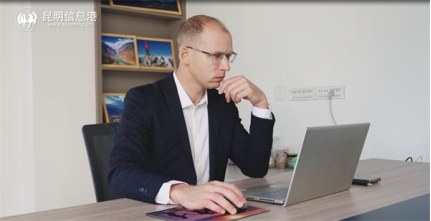
法国企业家潘伯良感受到了营商环境越来越好。记者王竣彦/摄
企业出海,钱和法律是绕不开的两道坎。昆明片区创新推出“无忧信用保险”,采取“信用保险+融资”模式,累计支持出口创汇超3亿美元;国际法律服务综合体整合涉外法律服务资源,成功入选全国百佳营商环境案例。金融环境的点滴改善,在昆明投资兴业的外商同样感受真切。“几年前,像我们这样的合资企业基本上贷不到款。”在昆明生活了十年的法国企业家潘伯良坦言,大约从2020年起,情况明显转变,“银行主动接触我们,提供信用贷款支持企业发展”。他本人还在昆明顺利办理了购房贷款。在他看来,“这些细微之处的改变,对留住人才很重要”。
推动产业升级,锻造高质量发展的“强引擎”
产业是园区的根基,也是制度创新和营商环境最终的落脚点。回望“十四五”,昆明片区成功创建装备制造、生物医药2个省级新型工业化产业示范基地,装备制造集群被认定为省级先进装备制造业集群。目前,片区拥有高新技术企业380家、国家级专精特新“小巨人”企业12家、省级专精特新中小企业188家,以工业为主导、二三产业协同发展的现代产业体系基本成形。
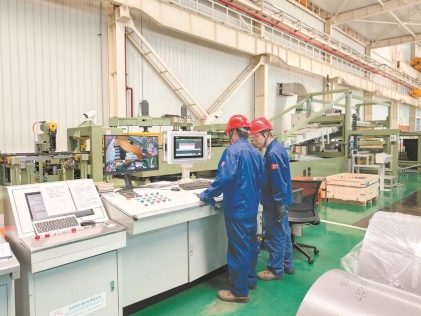
工人在云变电气智能化生产车间监控设备运行。
比数据更有说服力的,是一个个“老树发新枝”的故事。拥有90余年历史的云南变压器电气股份有限公司,建成全国海拔最高的500千伏变压器屏蔽试验大厅,填补云贵高原超高压制造空白,铁路牵引变压器市场占有率稳居全国第一,先后服务中老铁路、京雄高铁、渝昆高铁等国家级项目。该公司营销中心主任杨林介绍,企业正加快向数字化、智能化转型。与此同时,雪兰牛奶成为全国首个获得优质乳认证的乳企,云南西草资源从咖啡果皮中提取的植物细胞液荣获国际美妆原料创新奖,本土企业依托云南资源禀赋走出了差异化发展路子。

雪兰牛奶产品展示区,多款乳制品整齐陈列,展现云南本土乳企丰富的产品线。
产业要往外走,物流得跟上。2026年,总投资约10.6亿元的昆明物流集结中心项目在中国·昆明国际陆港王家营核心片区破土动工,将深度联动中老、中越等跨境物流通道,补齐片区智慧物流基建短板。这一项目与中老铁路运能释放形成呼应,“通道带物流、物流带经贸、经贸带产业”的良性循环正在昆明片区逐步形成。
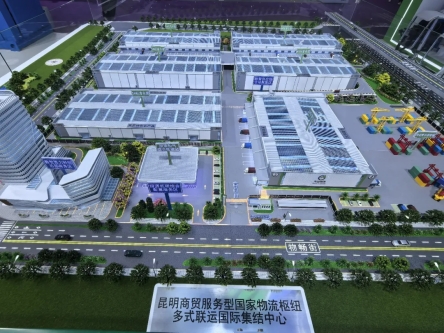
昆明物流集结中心主要建设布局沙盘
拓展开放合作,建设面向南亚东南亚的“辐射高地”
如果说制度创新和营商环境是“内功”,开放合作就是昆明片区的“外功”。七年来,昆明片区把区位优势转化为开放优势,持续拓展对外开放的广度与深度,面向南亚东南亚的辐射能级不断提升。
开放不只是货通其流,还有规则的对接。昆明片区依托国际法律服务综合体,统筹境内外法律实务、知识产权、财税金融、通关实务等资源,构建覆盖跨境报关、涉外仲裁、海外专利布局、本地化合规的全链条服务体系,引导企业从“单打独斗”转向“抱团合规出海”。
2026年,昆明片区携手云南省标准化研究院、市市场监督管理局签署合作协议,揭牌成立标准制度型开放促进平台,发布全国首个跨境铁路物流服务团体标准——《中老铁路集装箱国际班列跨境物流服务规范》,填补区域跨境物流标准化空白。云南省物流与供应链联合会有关负责人表示,标准让服务有了统一“度量衡”,可以用数据评判服务质量,倒逼行业提质升级。从“经验驱动”到“标准驱动”,折射出昆明片区制度型开放的深层进阶。
开放的大门也吸引了越来越多的国际目光。商务部国际商务官员研修学院组织拉美国家研修班到片区参观座谈,来自西班牙、哥伦比亚、哥斯达黎加等国的30余名官员和企业家,对片区“一站式”综合服务的国际化水平给予评价。随着中老铁路运能持续释放,越来越多企业搭上“澜湄快线”,实现“物流+贸易+产业”深度融合。
七年砥砺奋进,昆明片区以制度创新为引领、以营商环境为保障、以产业发展为根基、以开放合作为纽带,成功开辟出一条沿边开放发展的新路子。成就不仅体现于一个又一个“全国首单”、一组组提档升级的数据,更在于深度融入国家战略,充分发挥了推动中老命运共同体建设、辐射带动南亚东南亚区域发展的战略支点作用。
站在挂牌七周年的新起点上,昆明片区将继续锚定制度型开放方向,纵深推进改革创新,加快申建标准制度型开放试点,持续输出可借鉴、可推广的“昆明经验”。黄金通道上,沿边开放的步子正越迈越稳;试验田里,制度创新的热潮仍在涌动。

