Foreign Media Spotlight on the 4th Anniversary of the China-Laos Railway: The “Golden Corridor” Delivers Strong and Far‑Reaching Benefits
来源:InKunming时间:2025-12-11 09:18:23

As of December 2nd, the China-Laos Railway has been in operation for four full years. As a flagship project of China’s B&R Initiative, the railway has not only ended Laos' status as a "landlocked nation" but has also become a "Golden Corridor" driving regional economic integration, facilitating trade, and promoting people-to-people exchanges. Its broad spillover effects have continued to draw strong attention and positive coverage from media outlets around the world.
Foreign media widely agree that the value of the China-Laos Railway goes well beyond the scope of transport infrastructure. It has significantly shortened the travel time and distance between China and Laos, making the movement of people and goods more convenient and efficient. Moreover, with its robust transport capacity and extensive reach, it has injected vigorous momentum into the economic and social development of areas along the route, profoundly reshaping the regional development landscape.
4 Years of Progress, Fruitful Gains:A Highlight-Packed Report Card
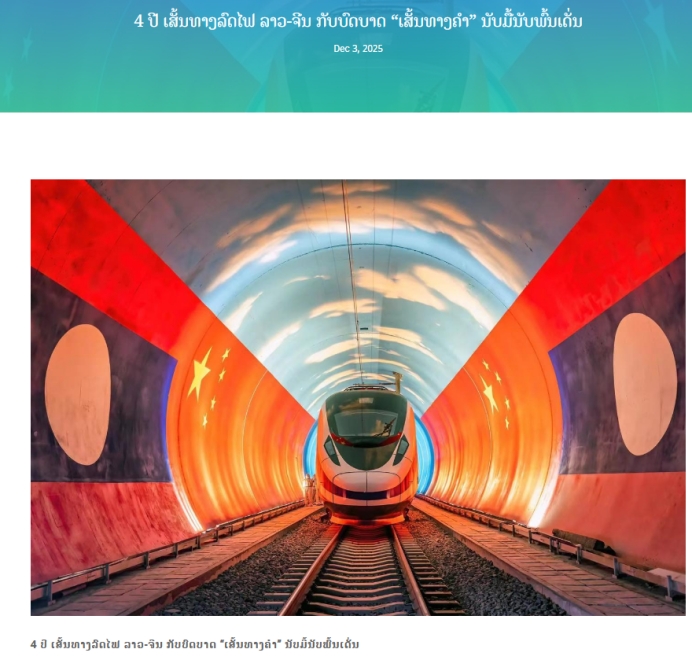
To mark the 4th anniversary of the railway's opening, leading Lao media outlets including the Vientiane Times, Laotian Times, and the Khaosan Pathet Lao (News Agency, KPL) published reports on December 3rd and 4th, providing a comprehensive review of its performance over the past four years. They praised the continuously amplifying effects of the "Golden Corridor," injecting new vitality into the development of Laos, China, and even the ASEAN region.
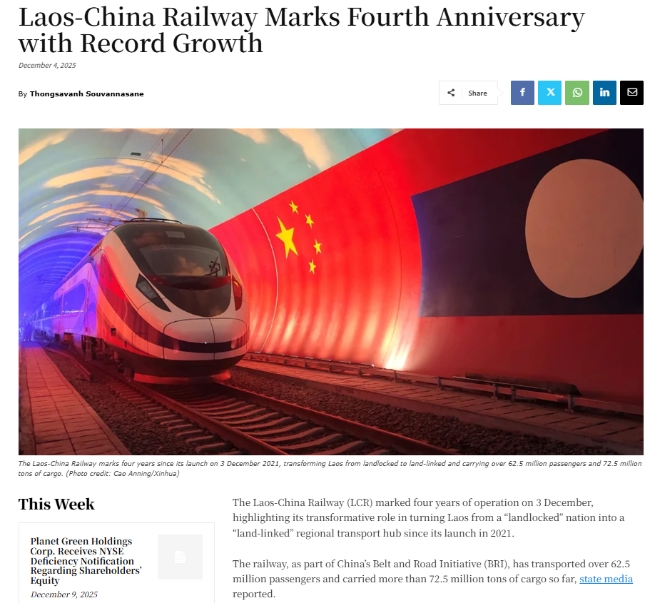
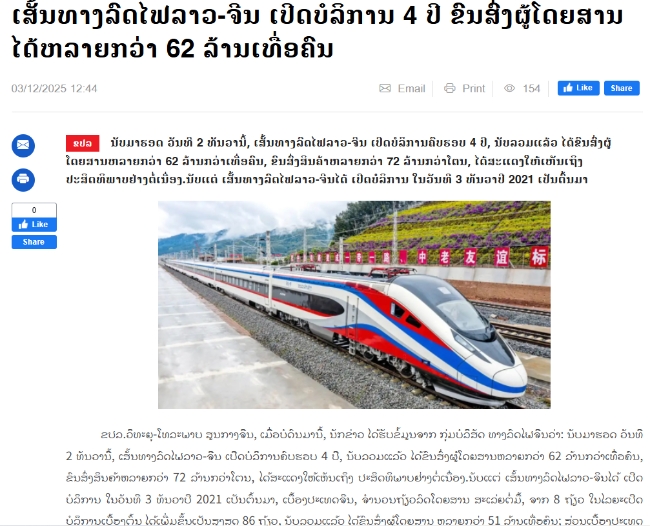
Data show that since its launch, the operational metrics of the China-Laos Railway have achieved leapfrog growth, cumulatively transporting over 62.5 million passengers and moving more than 72.5 million tons of cargo. For passenger transport, the average daily number of trains on the Chinese section increased from an initial 8 to a peak of 86, carrying a cumulative total of 51.34 million passengers. On the Lao section, daily passenger trains rose from 4 to a peak of 18, transporting over 11.24 million passengers cumulatively. Monthly passenger volume soared from 600,000 at the time of opening to a peak of 2.2 million, while daily cross-border passenger flows increased from 300 to a peak of 1,400.
In terms of freight, railway cargo operations have expanded from 2 to 23 daily routes over the past four years. The network has transported over 60,000 cargo trips, delivering goods to 19 countries and regions including Laos, Thailand, and Vietnam. More than 3,800 types of goods are now transported along the railway corridor. Advanced digital cargo stations and streamlined customs procedures have improved efficiency, slashing transit times from 40 hours to just 2 to 5 hours. Transport costs have fallen by 30 to 50 percent, and domestic transport costs in Laos have seen a reduction of 20% to 40%. In a milestone for agricultural exports, Laos shipped its first full train load of 1,000 tons of locally produced cassava starch to China via the LCR on 29 November.
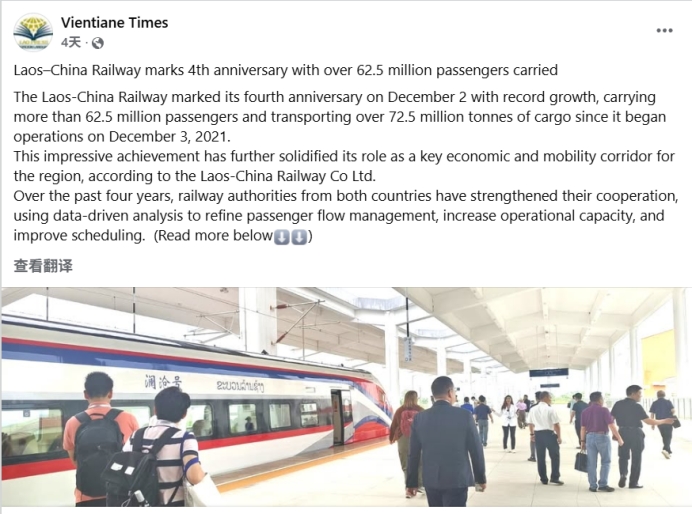
"This impressive achievement has further solidified its role as a key economic and mobility corridor for the region," reported the Vientiane Times. Over the past four years, railway authorities from both countries have strengthened their cooperation, using data-driven analysis to refine passenger flow management, increase operational capacity, and improve scheduling, providing a solid guarantee for the sustained and stable growth in transport volume.
Reshaping the Regional Landscape: Driving Growth in Both Trade and Tourism
The railway's role in stimulating the regional economy has become a core focus for foreign media. Lao National Radio pointed out on December 3rd that the railway not only achieves "smooth transportation" but also upgrades cities along the route from transport nodes to industrial centers. The Vientiane Saysettha Development Zone has attracted a growing number of enterprises by capitalizing on the railway’s logistics advantages, forming four industrial chains in new energy, new materials, healthcare, and biopharmaceuticals. The Mohan-Boten Economic Cooperation Zone has successfully achieved "cross-border industrial coordination" between China and Laos.
In the trade sector, the China-Laos Railway is restructuring regional supply chains. The Dutch "FreshPlaza" reported on June 9th that railway logistics costs have dropped by 60 per cent (compared to traditional overland shipping), while average retail prices for these imported fruits in China have fallen by 30 per cent. This reduction in transport costs has played a major role in improving market access and affordability.
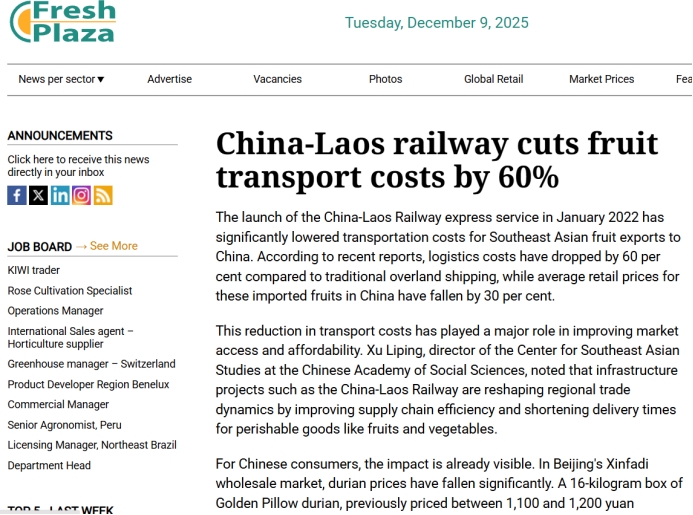
Xu Liping, director of the Center for Southeast Asian Studies at the Chinese Academy of Social Sciences, noted that infrastructure projects such as the China-Laos Railway are reshaping regional trade dynamics by improving supply chain efficiency and shortening delivery times for perishable goods like fruits and vegetables.
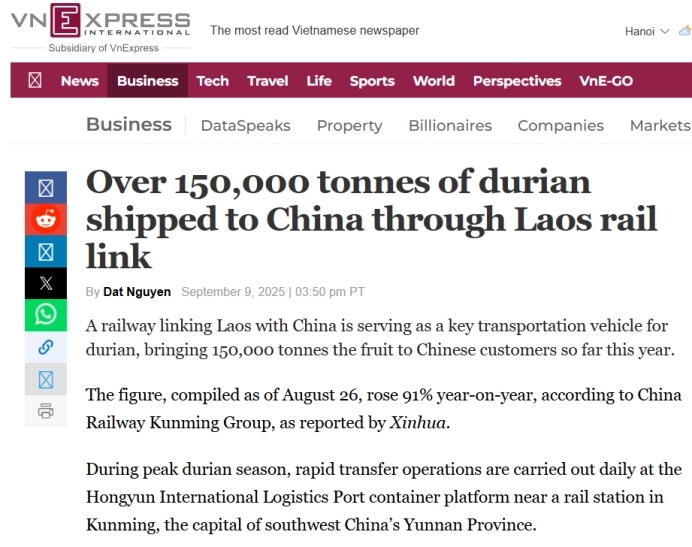
VnExpress reported on September 9th that the China-Laos Railway has become a key logistics link between China and ASEAN. Through the Lancang-Mekong Express, goods can be delivered from Vientiane, Laos, to Kunming in just 26 hours, far more efficient than traditional transportation.
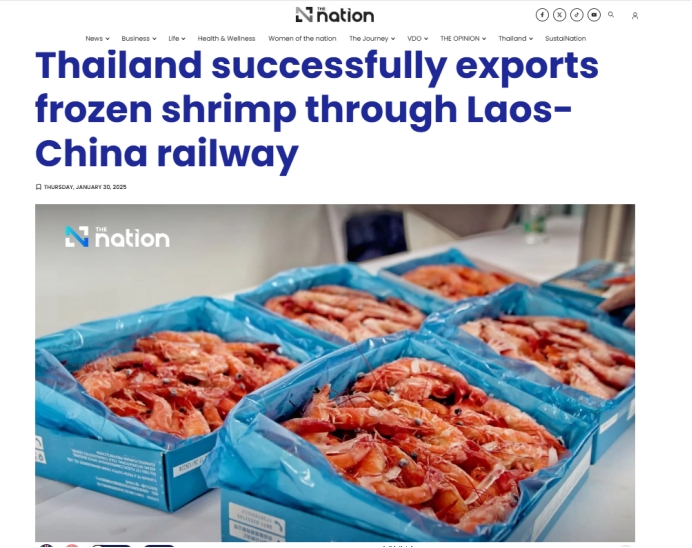
On January 3rd of this year, 24 tons of cooked frozen shrimp from Songkhla Province, Thailand, were successfully exported to China via the "Lancang-Mekong Express" international freight train on the China-Laos Railway, marking the official launch of pilot transport for chilled and frozen aquatic products. Thailand's The Nation reported on this. Bancha Sukkaew, The department’s director-general stated: "This export though the Mohan railway checkpoint is a good example of transportation between Thailand and China, which facilitates the opening of markets for frozen fishery products to multiple cities in China."
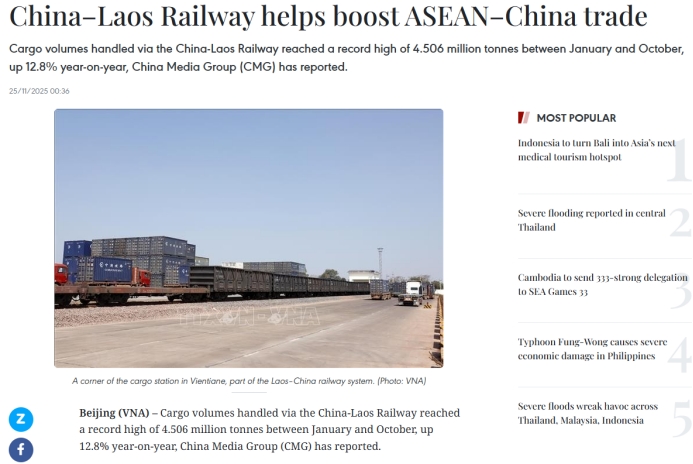
Citing data on November 25th, the Vietnam News Agency reported that in the first 10 months of 2025, the bilateral trade reached 862.7 billion USD, up 8.2% year-on-year. Experts noted that the railway plays an irreplaceable role in promoting connectivity between China and ASEAN.
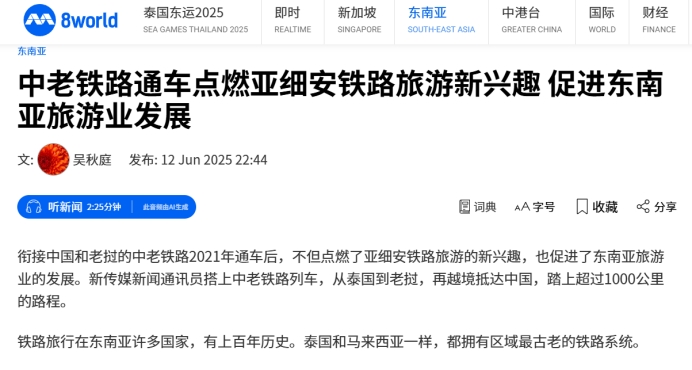
"The opening of the China-Laos Railway has not only ignited new interest in rail tourism within ASEAN but also boosted tourism development in Southeast Asia," reported Singapore's 8world News on June 12th. As the only landlocked country in Southeast Asia, Laos has reaped substantial benefits, with tourist arrivals increasing by over 30% in 2024 to reach 4 million. Experts believe this marks the beginning of a new era for railway travel in ASEAN.
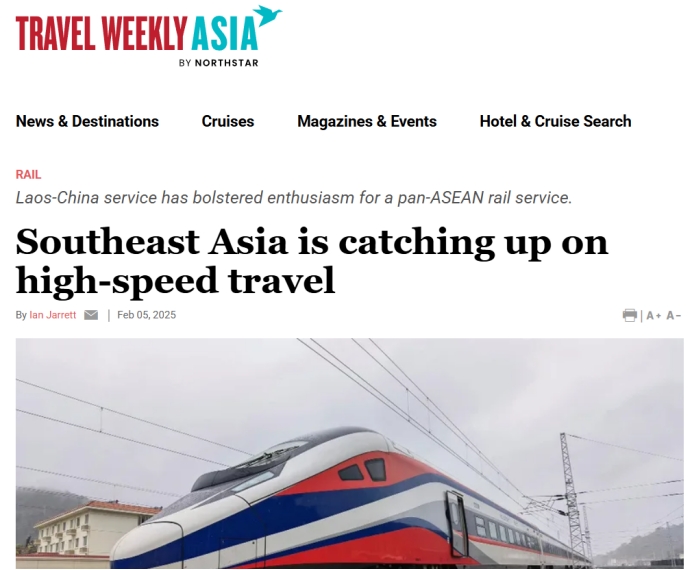
Singapore Asia Travel Weekly reported on February 5th that the success of the Laos-China high-speed rail link has bolstered enthusiasm for a pan-ASEAN rail service. This railway not only enhances regional connectivity but has also boosted tourism, particularly in Xishuangbanna, China, and Luang Prabang, Laos, which have seen increased visitor numbers.
Laurent Kuenzle, CEO of Asian Trails, describes the Laos-Kunming service as “a major leap forward in cross-border train travel in Asia,” he says,“Passengers can explore lesser-seen destinations and experience slow travel while enjoying scenic rural landscapes.” Having personally taken the journey, Kuenzle highlights the modern, punctual, and impeccably clean trains, as well as the airport-style stations equipped with cafés and convenience stores.
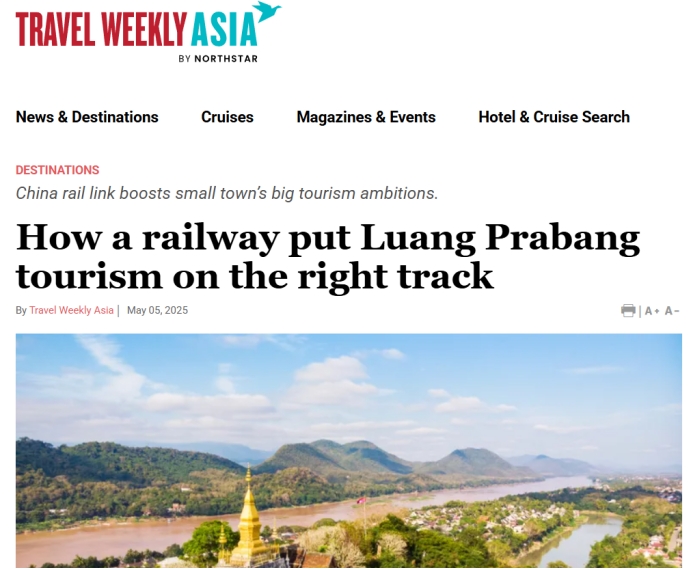
"The small Lao town of Luang Prabang has been one of the biggest winners in the success of the China-Laos Railway," reported Singapore Asia Travel Weekly on May 5th. In 2024, Luang Prabang saw a total of 2.3 million tourists, exceeding its original target of 900,000 with the top 10 source markets being China, South Korea, US, Thailand, and several other countries, with its international tourism influence continuously rising.
Improving People's Livelihoods: Delivering a "Benefit-the-People" Report Card
The "golden benefits" of the China-Laos Railway is even more evident in the improvement of livelihoods and social development. Lao National Radio stated that over the past 4 years, the railway has created over 100,000 direct and indirect jobs in Laos and,through a model combining Chinese technology with Lao management, trained thousands of Lao technical personnel.
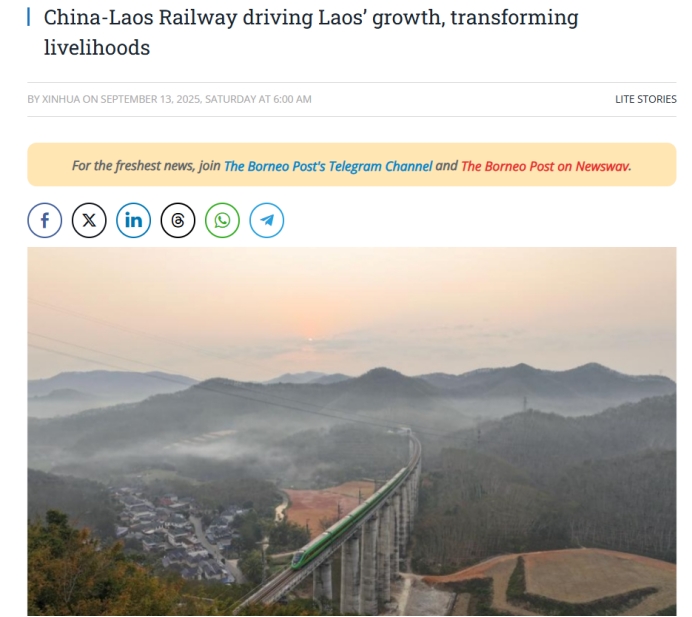
"The China-Laos Railway is transforming Laos by boosting trade, improving transport efficiency, and expanding market access, driving national economic growth while enhancing the everyday livelihoods of its people," reported Malaysia's The Borneo Post on September 13th, citing the personal experiences of several Lao citizens to illustrate the railway's impact.
Saiynoy, a fruit vendor and farmer said improvements in transportation have increased farmers’ incomes, encouraged higher production, and inspired more people to return to farming, while also creating more jobs for local communities. The railway has helped to stimulate local economies and strengthen communities along the route.
For Phouphet, an office worker who frequently travels for business, the railway has been a game-changer. “My job requires frequent travel to provinces across Laos, especially to Luang Prabang. Before the railway, the journey could take 6 to 12 hours,” Phouphet noted that the reduced travel time not only makes work easier but also help promote tourism in northern Laos.
For Pao, a 32-year-old worker, the railway is also a powerful It’s a symbol of progress: the railway has brought significant benefits to the country—opening doors to international trade, foreign investment, and tourism, while raising Laos’ profile as a more connected and accessible nation.
“Alongside its role in driving economic growth, the China-Laos Railway is bringing people closer and improving community infrastructure,” Somhak, residents of Vientiane, highlighted how the railway has made family visits easier, especially during special occasions or emergencies. Somhak also said that the railway has led to broader improvements beyond transportation. If managed well, the railway and its surrounding development could bring lasting benefits to the country.
A report by the UK Daily Express on September 21st more vividly illustrated this transformation. The article stated that a revolutionary train route has officially opened, bringing an end to decades of travel hardship in one country, “Before, tourists and locals alike were frequently packed into stuffy minibuses for hours on end, lurching over potholed roads. This route has become a “golden corridor” for cultural exchanges and booming trade between China and Thailand.

Weaving a stronger Connectivity Network: Ushering in a New Chapter in Regional Integration
Foreign media remain broadly optimistic about the future of the China–Laos Railway. The World Bank predicts that by 2030, transit trade volume through Laos could reach 3.9 million tons, a significant increase from 1.6 million tons in 2016, indicating the continuous release of regional trade potential. Currently, the maximum speed for trains on the Lao section is 160 km/h, and it is expected that cross-border rail transport speeds will further increase by 2030.
Lao National Radio believes that the China-Laos Railway has transcended its role as a mere "transport corridor," becoming an engine driving industrial development, a bond improving people's livelihoods, and a bridge for regional cooperation. Looking ahead, the railway will continue to expand into neighboring regions, extending to Thailand and Malaysia, positioning Laos as a hub in the Asian regional railway network. Simultaneously, it will connect to broader markets, driving deeper regional economic integration, with the "Golden Corridor" effect continuing to be prominent.
The UK Daily Express also believes that with the continuous deepening of regional connectivity, this "Golden Corridor" will continue to inject lasting momentum into the prosperous development of China, Laos, and the ASEAN region.
"Furthermore, the railway’s role in fostering deeper economic integration with neighboring countries is paving the way for more investments, partnerships, and joint ventures across the region," reported the "Travel and Tour World" website on September 24th. The Laos-China Railway’s potential continues to grow. Efforts are underway to further enhance the capacity of the railway, including plans for expanding services and improving infrastructure. There are also ongoing initiatives to modernize logistics systems, making cross-border trade even more efficient. The strategic vision for the railway is to continue developing Laos as a regional transportation hub, connecting it more efficiently with both Southeast Asia and Europe. Plans are in place to further integrate the railway into the broader Belt and Road Initiative, allowing for smoother trade between China, Laos, and international markets.
On 2 December, Laos and Thailand opened a freight train route connecting Thanaleng Dry Port in Vientiane Capital with Thailand’s Nong Khai Station. The Laotian Times noted that future plans involve connecting the new route with the China-Laos Railway via a planned new railway bridge crossing the Mekong River, adding another critical node for regional connectivity.

截至12月2日,中老铁路开通运营满四年。作为中国“一带一路”倡议的旗舰项目,中老铁路不仅终结了老挝“陆锁国”的困境,更成为驱动区域经济融合、促进贸易畅通、便利人员往来的“黄金大通道”,其辐射带动效应引发多国媒体持续聚焦与高度评价。
外媒普遍认为,中老铁路价值远超交通基础设施本身,它既极大缩短了中国与老挝的时空距离,让人员往来和物资流通更便捷高效,更以强劲的运输能力、广泛的辐射范围,为沿线地区经济社会发展注入蓬勃动力,深刻重塑区域发展格局。
四载耕耘结硕果 “成绩单”亮点纷呈
为纪念中老铁路开通四周年,《万象时报》《老挝时报》、巴特寮通讯社等老挝主流媒体于12月3日、4日集中发布报道,系统回顾四年来的运营“成绩单”,盛赞“黄金大通道”效应持续放大,为老挝、中国乃至东盟地区发展注入新活力。
数据显示,自开通以来,中老铁路运营数据实现跨越式增长,累计发送旅客超6250 万人次,货物运输量突破7250万吨。客运方面,中国段日均开行客车从初期8列增至最高86列,累计发送旅客5134万人次;老挝段日均旅客列车从4列增至最高18列,累计发送旅客超1124万人次。月度客运量从开通时的60万人次飙升至最高220万人次,日出入境人数从300人次增至最高1400人次。
货运方面,跨境货物列车日均开行数量从2列增至最高23列,累计发送跨境货物超1600万吨,覆盖老挝、泰国、越南等19个国家和地区,跨境运输商品种类拓展至3800余种。通过升级数字化货运站、简化海关程序,商品流通效率显著提高,运输成本大幅降低。货物通关时间从40小时大幅压缩至2到5 小时,昆明经老挝至泰国的货运成本降低30% 至50%,老挝境内运输成本降低20%至40%。2025年11 月29日,老挝首次通过中老铁路向中国运送整列1000吨本地木薯淀粉,成为老挝农产品出口的里程碑事件。
“这些令人瞩目的成就进一步巩固了中老铁路作为区域关键经济与交通走廊的地位。”《万象时报》报道,过去四年,中老两国铁路部门深化合作,通过数据驱动分析优化客流管理、提升运营能力、改进列车调度安排,为运输量持续稳定增长提供了坚实保障。
重塑区域格局 贸易与旅游双向赋能
中老铁路对区域经济的拉动作用成为外媒关注的核心焦点。老挝国家广播电台12月3日指出,铁路不仅实现“顺畅运输”,更推动沿线城市从交通节点升级为工业中心:万象赛色塔综合开发区依托铁路物流优势集聚众多企业,形成新能源、新材料、医疗和生物制药四大产业链;磨憨—磨丁经济合作区成功实现中老“跨境产业协调”。
在贸易领域,中老铁路正重构区域供应链。荷兰“全球果蔬网”6月9日称,铁路运输使东南亚水果出口中国的物流成本直降60%,终端售价回落30%以上,既改善了市场准入,也提升了商品可负担性。
中国社会科学院东南亚研究中心主任徐丽萍分析:“通过提高供应链效率和缩短果蔬等易腐商品运输时间,中老铁路正在重塑区域贸易格局。”
越南快讯9月9日称,中老铁路已成为中国与东盟间重要物流纽带,“澜湄快线”使货物从老挝万象运抵中国昆明仅需26小时,效率远超传统运输方式。
今年1 月3日,泰国宋卡府24吨熟冻虾通过中老铁路“澜湄快线”国际货物列车成功出口中国,标志着冰鲜水产品试点运输正式启动。泰国《国民报》对此进行报道。泰国渔业部副部长、渔业部代理总干事Bancha Sukkaew 表示:“此次出口是泰国通过磨憨铁路口岸向中国出口产品的又一例子,有助于泰国通过铁路向中国多个城市出口冷冻水产品。”
越通社11月25日援引数据显示,中老铁路推动中国与东盟贸易持续升温,2025年前10个月双边贸易额达8627亿美元,同比增长8.2%。专家指出,中老铁路在促进中国与东盟互联互通中发挥着不可替代的作用。
“中老铁路通车,不但点燃东盟铁路旅游新兴趣,也促进东南亚旅游业发展。”新加坡8视界新闻6月12日称,作为东南亚唯一内陆国家,老挝获益显著,2024 年游客人数增长超过三成,达400万人次。专家认为,这标志着东盟铁路旅行新时代的开启。
新加坡《亚洲旅游周刊》2月5日报道,中老铁路运营成功激发了人们对泛东盟铁路服务的热情。这条铁路不仅增强区域互联互通,更带动中国西双版纳、老挝琅勃拉邦等热门目的地游客数量显著增长,促进泰国和马来西亚旅游业发展。
亚洲旅行社Asian Trails 首席执行官Laurent Kuenzle将其誉为“亚洲跨境火车旅行的一次重大飞跃”。他表示:“乘客可以通过中老铁路探索鲜为人知的目的地,体验慢节奏的旅行,同时欣赏美丽的乡村风光。”曾乘坐过该线路的他特别赞扬“现代化、准点且一尘不染的列车,以及配备咖啡馆和便利店的车站”。
“老挝小镇琅勃拉邦是中老铁路最大受益者之一。”新加坡《亚洲旅游周刊》5月5日报道,2024年,琅勃拉邦接待游客230万人次,远超90万人次的预期目标,其前十大客源市场涵盖中国、韩国、美国、泰国等多个国家,国际旅游影响力持续提升。
深耕民生福祉 书写“惠民答卷”
中老铁路的“黄金效应”更体现在民生改善和社会发展方面。老挝国家广播电台称,过去4年,铁路为老挝创造超10万个直接和间接就业岗位,通过“中国技术+老挝管理”模式为老挝培训数千名技术人员。
“中老铁路正通过促进贸易、提高运输效率和扩大市场准入来推动老挝经济增长,改善人民日常生活。”马来西亚《婆罗洲邮报》9月13日列举多位老挝民众的亲身经历,展现铁路对老挝民众日常生活的改变。
老挝水果商贩兼农民Saiynoy坦言:“交通运输的改善提高了农民收入,激励更多人重返农业,同时也为当地创造更多就业机会,有助于刺激经济,推动沿线地区发展。”
对于经常出差的上班族Phouphet而言,铁路彻底改变了他的工作模式:“我的工作需要经常前往琅勃拉邦,在铁路建成前,这段旅程可能需要6到12个小时,现在只需2个小时。”旅行时间的缩短不仅减轻了工作压力,更带动老挝北部休闲旅游业的发展。
32岁的老挝工人Pao则将铁路视为国家进步的象征:“它给老挝带来了巨大好处,不仅打开国际贸易、外国投资和旅游业的大门,也提升了老挝国际形象。”
中老铁路还拉近了人与人之间的距离,改善了社区基础设施。万象居民Somhak强调铁路如何让探亲访友变得更加容易,尤其是在特殊场合或紧急情况下。她还提到,铁路开通带来了额外福利:“车站周围更好的道路和基础设施,若管理得当,这些发展能为国家带来持久利益。”
英国《每日快报》9 月21日的报道更直观地展现了这种转变。文章称,中老铁路的开通,结束了老挝数十年的出行困境。“过去,游客和当地居民经常要挤在拥挤的小巴里,在坑坑洼洼的道路上颠簸数小时。如今,这条铁路已成为促进中老两国文化交流和贸易蓬勃发展的‘黄金大通道’。”
织密联通网络 开启区域融合新篇
对于中老铁路的未来,外媒普遍持乐观预期。世界银行预测,到2030 年,经老挝的过境贸易量可达390万吨,较2016年的160万吨实现大幅增长,区域贸易潜力将持续释放。目前,老挝段列车最高时速为160 公里,预计到2030 年,跨境铁路运输速度将进一步提升。
老挝国家广播电台认为,中老铁路已超越“通道”范畴,成为驱动产业发展的引擎、改善民生的纽带和区域合作的桥梁。展望未来,该铁路将继续向周边拓展,延伸至泰国和马来西亚,使老挝成为亚洲区域铁路网络的中心。同时,铁路将连接更广阔的市场,推动区域经济深度融合,“黄金大通道”效应持续凸显。
英国《每日快报》也认为,随着区域互联互通的持续深化,这条“黄金大通道”将继续为中老两国及东盟地区的繁荣发展注入持久动力。
“未来几年,中老铁路将在支持老挝长期经济发展和区域一体化方面发挥更加重要的作用。”“旅行与旅游世界”网站9月24日报道称,中老铁路正通过提升铁路运力、扩大服务范围、改善基础设施三项重点工作释放更大潜力;同时推进物流系统现代化改造,进一步提高跨境贸易效率。其战略愿景是将老挝打造为区域交通枢纽,更高效地连接东南亚与欧洲,并深度融入“一带一路”倡议,促进中国、老挝与国际市场的贸易往来。
12月2日,老挝与泰国正式开通万象塔纳楞陆港至廊开火车站的货运线路。《老挝时报》指出,未来计划通过规划中的湄公河新铁路桥与中老铁路对接,为区域互联互通再添关键节点。

