These "Old Friends" Have Voted for Kunming with Their Wings for Forty Years
来源:InKunming时间:2025-11-06 10:48:09

When the temperature in the "Spring City" drops, a subtle anticipation stirs within Kunming residents. Since that winter of 1985, large flocks of black-headed gulls, dwelling in the distant north, have gradually arrived in warm Kunming. They reside and forage here, only reluctantly departing in March of the following year. This cycle has repeated for a full forty years. Through forty years of steadfast devotion, we and the black-headed gulls have journeyed from "new friends" at our first encounter to becoming each other's "old companions."
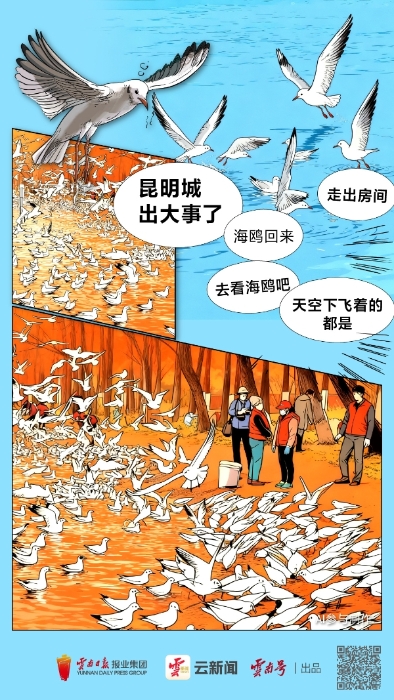
"A great event has happened in Kunming City / The black-headed gulls have returned / They are everywhere / Let's go see the black-headed gulls / The sky is filled with them flying..." the famous writer and poet Yu Jian wrote in his "Black-headed Gull Collection." These few lines vividly convey the special feelings Kunming residents have for the black-headed gulls:
It's not a "small matter," but a "big event."
They haven't just "arrived," they have "returned."
It's not "in a few spots," but "everywhere."
Every winter, when the black-headed gulls return, they fly all over Kunming.
For the people of Kunming,
this is a major event that has been recounted for forty years.
A Life Journey Crossing Generations
Black-headed gulls typically reach their first breeding age between 2-4 years old and then participate in migration annually. Scientific observations show that as migratory birds with a lifespan of 20-32 years, they still undertake long-distance migrations seasonally, even in their later stages of life (around 15 years and beyond). This means that the gull population we see today could represent 10 or even 20 generations present concurrently.

A Beautiful Coincidence Forged a Forty-Year Pact
The black-headed gulls' choice of Kunming was not accidental. In 1985, the first group of black-headed gulls arrived in Kunming as a result of seeking refuge from the cold air in southern China. Initially wary of humans, they found an ideal wintering ground in Kunming, which boasts warm climate, vast waters of Dianchi Lake, and abundant food provided by enthusiastic citizens.
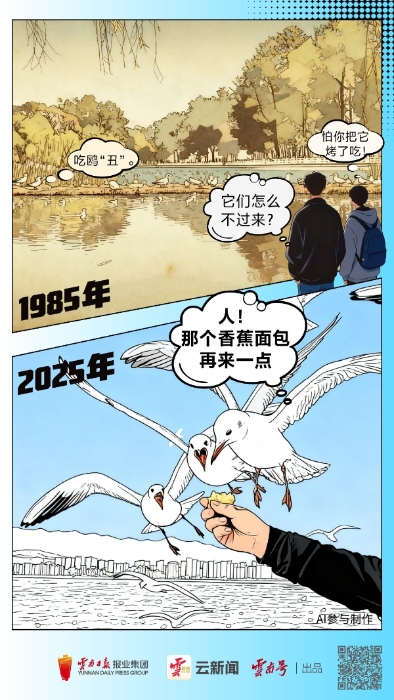
Birds have extremely stringent requirements for habitats, especially migratory birds. The black-headed gulls have returned year after year, with their numbers growing from an initial few thousand to a stable nearly 40,000 today. This is a testament to Kunming's continuously improving ecological environment and offers the most compelling proof of "Blue Kunming," "Clear Dianchi," and "Green Spring City."

Guardianship is a Two-Way Journey
The forty-year "Spring City Pact" is not simply a matter of feeding and watching, but a deeper symbiotic relationship.
On December 12, 1985, the People's Government of Kunming Municipality issued a notice to protect black-headed gulls, requiring all citizens to foster a good social trend of loving and protecting birds.

In January 1986, the People's Government of Yunnan Province allocated 30,000 yuan as funds for the protection of black-headed gulls, and the Kunming environmental protection department set up feeding stations. The Black-headed Gull Research Group at Yunnan University began banding research on the gulls.
On November 1, 2023, the "Regulations on Civilized Observation of Black-headed Gulls in Kunming City" were implemented, providing a legal basis for protection efforts.
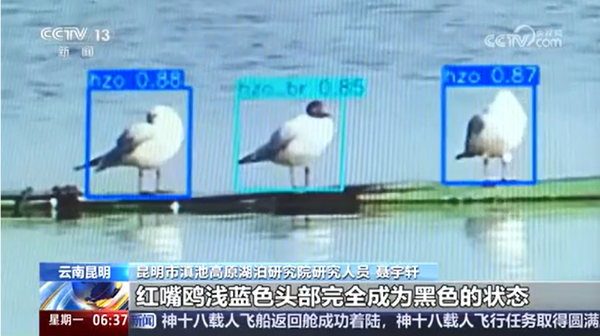
Today, Kunming also utilizes technologies such as AI intelligent bird observation systems and voiceprint recognition to scientifically research the migration behavior and patterns of black-headed gulls, making protection efforts more precise and efficient.
This protection model, led by the government, driven by scholars, and participated in by the general public—from experts to ordinary citizens and tourists—has built a unique humanistic environment, allowing the black-headed gulls to feel safe and welcome.
Ecological Answer Sheet: The Best Proof of Lucid Waters and Lush Mountains
In the forty years since the black-headed gulls first overwintered in Kunming, the city's efforts in ecological civilization construction have intensified, and its environment has become increasingly beautiful.

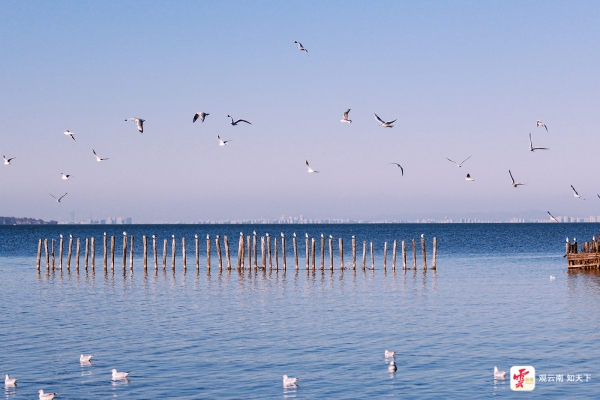
Since the "14th Five-Year Plan," over 62,900 mu of ecological belts have been built along the shores of Dianchi Lake. The variety of plants in these ecological belts has increased to 303 species, bird species to 175, and fish species have recovered to 26. Biodiversity has significantly improved, providing richer food sources and a safer habitat for the black-headed gulls.
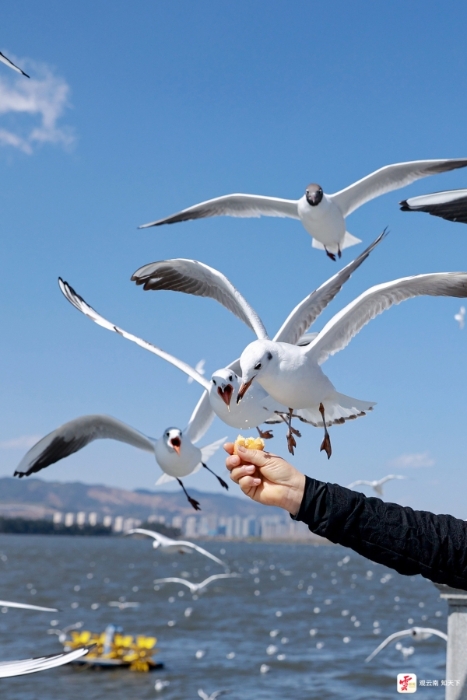
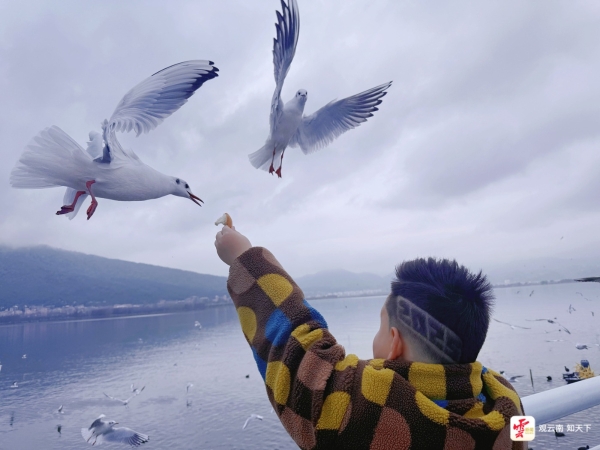
The encounter between the black-headed gulls and Kunming has long transcended a seasonal migration of a bird species; it has evolved into an ecological tale that has spanned forty years and represents a mutual journey.

当春城的气温骤降,昆明人便隐隐多了一份期待。从1985年那个冬天开始,栖居在遥远北方的大批红嘴鸥渐次抵达温暖的昆明,在这里栖居、觅食,直到第二年三月才依依不舍地离开。如此往复,至今已整整四十年。四十载温情守望,我们与红嘴鸥,早已从初识的“新朋友”成了彼此的“老伙计”。
“昆明城出大事了/海鸥回来/到处都是/去看海鸥吧/天空下飞着的都是”……著名作家、诗人于坚在《海鸥集》中如是写道。寥寥几句,便教人望见昆明人对红嘴鸥的特殊感情:
不是“小事”,是“大事”
不是“来了”,是“回来”
不是“几处”,是“到处”
每年冬天,红嘴鸥回来,满昆明城到处飞舞
对昆明人来讲
是讲述了四十年的大事
跨越世代的生命之旅
红嘴鸥首次繁殖年龄通常为2-4岁,此后每年参与迁徙。科研观察显示,作为寿命可达20-32年的候鸟,即使进入老年阶段(约15年以上),红嘴鸥仍会按季节进行长距离迁徙。这意味着,我们看见的红嘴鸥族群,可能是10代甚至20代同堂。
一场美丽的意外,铸就四十年约定
红嘴鸥选择昆明并非偶然。1985年,首批红嘴鸥因躲避华南地区的冷空气而意外抵达昆明。它们最初对人类充满警惕,但昆明温暖的气候、滇池提供的广阔水域,以及市民们热情的投喂,让它们找到了理想的越冬地。
鸟类对栖息地的要求极为苛刻,尤其是候鸟。红嘴鸥年复一年地归来,数量从最初的数千只增长到如今稳定的近4万只,这背后是昆明持续改善的生态环境,也是“昆明蓝”“滇池清”“春城绿”最有力的证明。
守护,是一场双向奔赴
四十载“春城之约”,并非简单的投喂与观赏,而是一种深层次的共生关系。
1985年12月12日,昆明市人民政府发布保护红嘴鸥的通告,要求全市人民树立爱鸟护鸟的良好社会风尚。
1986年1月,云南省政府拨款3万元作为保护红嘴鸥的费用,并由昆明环保部门设点投食。云南大学红嘴鸥课题组开始对红嘴鸥的环志研究。
2023年11月1日《昆明市文明观赏红嘴鸥规定》实施,为保护工作提供了法律依据。
如今,昆明市还运用AI智慧鸟类多元观测系统、声纹图谱识别等技术,对红嘴鸥的迁徙行为和规律进行科学研究,使保护工作更加精准高效。
从专家学者到普通市民、游客,这种由政府主导、学者发力、公众参与的保护模式,构建了独特的人文环境,让红嘴鸥感受到安全与友好。
生态答卷:绿水青山的最好证明
红嘴鸥首次抵昆越冬后的四十年里,昆明的生态文明建设力度越来越大,环境越来越美。
“十四五”以来,滇池沿岸已建成湖滨生态带6.29万亩,生态带的植物增至303种,鸟类175种、鱼类恢复至26种,生物多样性得到显著提升,为红嘴鸥提供了更丰富的食物来源和更安全的栖息环境。
红嘴鸥与昆明的相遇,早已超越了一种鸟类的季节性迁徙,演变为一场持续四十载、双向奔赴的生态佳话。

